

Frequently Asked Questions (FAQs) About Affidavits in the Philippines
An affidavit is a written statement made voluntarily by a person (called the affiant) under oath, declaring that the contents are true and correct. It is usually signed before a notary public or authorized officer.
Affidavits are commonly used for:
- Affidavit of Support
- Affidavit of Consent
- Affidavit of Loss
- Affidavit of Explanation
- Affidavit of Undertaking
- Affidavit of Discrepancy
- Affidavit of Cohabitation
- Affidavit of Guardianship
- Affidavit for Travel Consent of a Minor
- Judicial Affidavits
- And other form of declarations and statements
Yes. In most cases, an affidavit must be notarized to make it a public document and legally recognized by government agencies, courts, and private institutions.
In the Philippines, affidavits may be notarized by:
- A duly commissioned Notary Public
- Philippine Embassies or Consulates abroad through consular notarization
Valid government-issued identification cards are usually required, such as:
- Passport
- Driver’s License
- UMID
- PRC ID
- PhilSys ID
- Other government-issued IDs with signature and photo
No. The affiant must personally appear before the notary public or consular officer to sign the affidavit and swear to its contents.
There is generally no fixed expiration period under Philippine law. However, the receiving office or agency may require affidavits issued within:
- 3 months
- 6 months
- 1 year
Applicants are advised to check the specific requirements of the receiving authority.
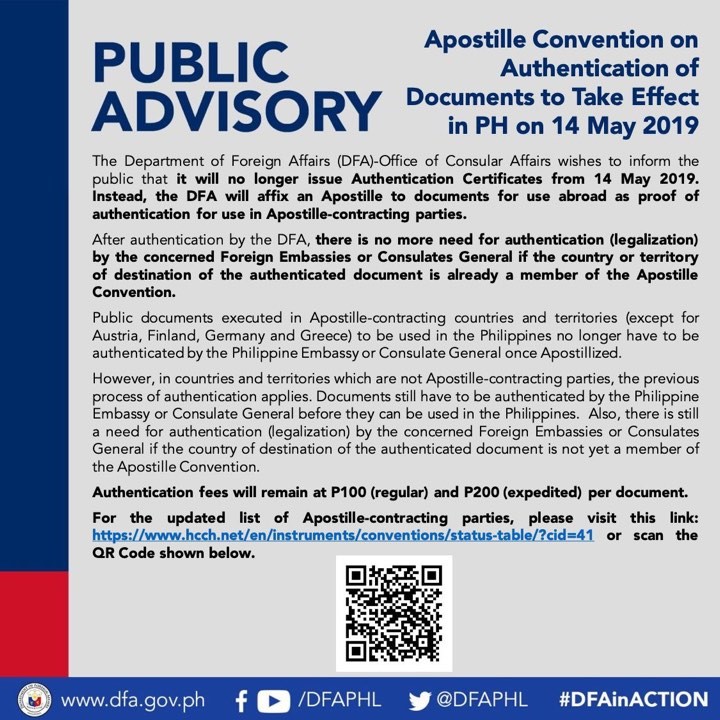
Yes. Affidavits executed abroad may be used in the Philippines if they are:
- Notarized by the Philippine Embassy or Consulate; or
- Notarized locally and apostilled by the competent authority of the foreign country.
No. Documents notarized by a Philippine Embassy or Consulate are considered public documents and are generally valid for use in the Philippines without further apostille authentication.
It depends on the receiving office and purpose of the affidavit. Some agencies accept a single affidavit for multiple uses, while others may require a separate affidavit for each transaction.
Providing false statements in an affidavit may result in criminal liability for perjury under Philippine law.
Generally, minors cannot independently execute affidavits. A parent, guardian, or legal representative usually executes the affidavit on their behalf.
Affidavits may be written in English or Filipino. If written in another language, an official English translation may be required.
Most affidavits do not require witnesses unless specifically required by the receiving office or the nature of the document.
Corrections after notarization are generally not allowed. If there are errors, a new affidavit may need to be executed and notarized.
Some agencies may temporarily accept scanned copies, but original notarized copies are often required for official transactions.
Not always. Simple affidavits may be self-prepared. However, legal advice is recommended for complex matters involving property, court cases, immigration, or financial obligations.
(For more information, call (03) 7023 7032, email [email protected], or check out our Facebook account, Philippine Consulate General, Melbourne).